Industrial hose selection often feels straightforward until a failure occurs. Pressure ratings and flexibility specifications determine whether your fluid transfer system operates reliably or becomes a safety liability. Many purchasing decisions focus solely on cost, overlooking how pressure tolerances affect long-term performance. Mismatched specifications lead to failures that halt production.
Choosing the right stainless steel hose requires balancing multiple performance factors that aren’t obvious from product specifications. Pressure ratings indicate maximum operating limits, but flexibility determines real-world performance where movement occurs constantly. Material composition affects both characteristics, and understanding this relationship prevents costly mistakes. Engineers who grasp these fundamentals reduce maintenance costs significantly.
What Pressure Ratings Actually Measure
Working Pressure Versus Burst Pressure: Working pressure represents the maximum continuous operating pressure a hose can safely handle during normal use. Burst pressure indicates complete structural failure, typically four times the working pressure. Confusing these values leads to dangerous installations where hoses operate near failure thresholds. Pressure spikes occur regularly in industrial systems.
Testing Standards and Certification: Manufacturers test hoses under controlled conditions that may not reflect your actual operating environment. Temperature variations, chemical exposure, and mechanical stress reduce effective pressure ratings over time. British and international standards provide baseline expectations, but real-world applications often demand conservative safety factors. Certified testing offers assurance when critical applications are involved.
Pressure Drop and Flow Dynamics: Internal diameter and hose length create pressure losses that affect system performance beyond maximum ratings. Smaller diameter hoses experience greater pressure drop across longer runs, requiring higher pump pressures that stress other components. Calculating total system pressure prevents situations where equipment operates at limits constantly. Many designers underestimate these effects until flow rates prove inadequate.
The Flexibility Factor in Hose Performance
Bend Radius and Installation Constraints: Every hose has a minimum bend radius below which internal reinforcement layers may crack or kink. Tight installation spaces tempt installers to exceed these limits, compromising both pressure rating and service life. Flexible hoses accommodate movement better than rigid piping, but only within manufacturer specifications. Space saved by aggressive bending rarely justifies maintenance costs.
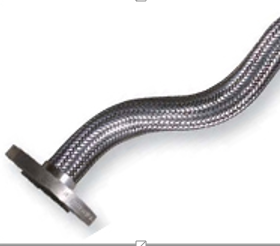
Material Properties and Movement: Different materials offer varying flexibility characteristics that suit specific applications better than others. Metal hoses provide excellent chemical resistance and temperature tolerance whilst maintaining surprising flexibility in corrugated designs. Rubber and thermoplastic options excel in applications requiring frequent movement or extreme bending. Trade-offs between flexibility and pressure capacity become apparent when comparing materials.
Fatigue Resistance Over Time: Repeated flexing eventually weakens any hose construction through metal fatigue or material degradation. Applications involving constant movement require hoses specifically designed for dynamic service with reinforced flexibility zones. Static installations can use less flexible designs offering higher pressure ratings and longer service life. Misapplying static-rated hoses in dynamic environments guarantees premature failures.
Matching Specifications to System Requirements
Assessment of Operating Conditions: System pressure requirements extend beyond simple maximum values to include surge pressures, temperature fluctuations, and environmental factors. Chemical compatibility becomes critical when aggressive fluids or cleaning agents contact hose materials regularly. Ambient conditions like UV exposure, ozone, and temperature extremes degrade certain materials faster. Thorough assessment prevents specification mismatches that become obvious after installation.
Safety Factors and Design Margins: Industry practice recommends operating at no more than 80% of rated working pressure to account for wear/tear and unexpected conditions. Higher safety margins suit critical applications where failure consequences are severe or operating conditions vary significantly. Cost pressure sometimes encourages tighter margins, but system failures and safety incidents far exceed savings. Conservative specifications prove valuable during transients.
Application-Specific Considerations: Different industries face unique challenges that standard specifications don’t fully address. Consider these factors when selecting hoses for specific environments:
- Food processing requires sanitary designs with smooth bore construction that prevent bacterial growth and allow thorough cleaning cycles.
- Chemical plants need compatibility verification beyond basic resistance charts, as chemical mixtures often behave differently than pure compounds.
- High-temperature applications must account for pressure rating reductions that occur as operating temperatures increase beyond ambient conditions.
- Mobile equipment faces vibration and flexing cycles that accelerate wear compared to stationary installations with equivalent pressure requirements.
See also: Smart Home Technology Explained
Balancing Performance Trade-offs
Flexibility Versus Pressure Capacity: Hose constructions that maximise flexibility generally sacrifice some pressure capacity compared to less flexible designs. Multiple reinforcement layers increase pressure ratings but reduce bend radius and flexibility characteristics. Engineers must prioritise which performance aspect matters more for each specific application. Specifying the highest-rated hose available often creates installations where excessive stiffness causes mounting problems.
Cost and Performance Relationships: Premium hoses command higher prices through better materials, tighter manufacturing tolerances, and extended service life. Budget options may meet published specifications whilst providing marginal safety factors that become problematic under stress. Life-cycle cost analysis reveals that higher initial investment pays for itself through reduced maintenance. Short-term budget constraints shouldn’t drive decisions creating long-term expenses.
Long-term Reliability Factors: Hose assemblies include end fittings and couplings that must match the hose’s pressure and flexibility characteristics. Crimped connections provide permanent assemblies with consistent performance, whilst quick-release couplings offer operational flexibility for equipment requiring frequent disconnection. Quality variations in fittings affect overall assembly reliability as much as the hose itself. System reliability depends on the weakest component always.
Conclusion
Pressure ratings and flexibility specifications determine whether industrial hose installations meet performance expectations or create ongoing maintenance problems. Understanding how these characteristics interact with actual operating conditions prevents costly mistakes compromising safety and efficiency. Material selection, installation practices, and operating margins influence long-term reliability in ways not immediately obvious. Take time to assess total system requirements rather than focusing solely on maximum pressure ratings.