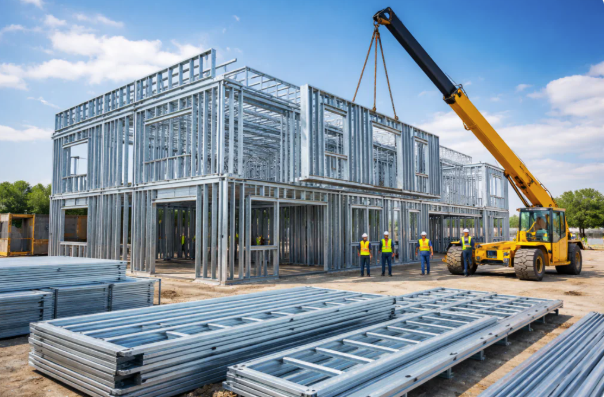
Building in the Four Corners region- the high desert country where Colorado, Utah, Arizona, and New Mexico meet- is not like building anywhere else in the country. The seasons are short. The weather is unpredictable. Skilled labor is harder to find and harder to keep on a jobsite than in larger metropolitan markets. And for developers and general contractors who depend on predictable schedules to protect their margins, the traditional on-site framing model creates risks that compound with every lost week.
Traditional framing leaves your project exposed- to weather, to labor shortages, to the kind of delays that push carrying costs higher while the build sits partially completed through a weather event or a crew shortage that nobody saw coming. In a region where the building window is already compressed, these setbacks are not minor inconveniences. They are genuine threats to project profitability.
Higher Purpose Homes was founded specifically to address these challenges. By building framing kits off-site while the foundation sets, their prefab framing system compresses timelines, reduces on-site labor requirements, and gets projects dried-in in days rather than weeks. Here is why prefab framing is rapidly becoming the preferred construction method for developers, general contractors, and homeowners across the Four Corners and the broader Southwest.
What Is Prefab Framing and How Does It Work?
Prefab framing- also called panelized framing- is a construction method where the structural framing components of a building are manufactured in a controlled indoor environment before being transported to the job site for assembly.
Rather than having a framing crew measure, cut, and assemble lumber on-site in whatever weather conditions exist that day, prefab framing produces precision-built panels in a shop setting where quality control is consistent, waste is minimized, and the work is not subject to rain, wind, snow, or temperature extremes.
Higher Purpose Homes’ process follows three straightforward phases:
Pre-Construction Detailing The project design is reviewed and prepared for manufacturing. Structural details are confirmed, any design issues are identified and resolved before manufacturing begins, and the framing kit is planned to the specifications of the completed design.
Panel Manufacturing While the foundation is being poured and cured on site, Higher Purpose Homes is manufacturing the framing kit in their controlled shop environment. These two phases of the project run simultaneously- compressing the overall project timeline without rushing either process.
Panel Set and Framing Completion Once the foundation is ready and the panels arrive on site, a small crew and crane can take the project from concrete to dried-in in days. What traditionally required weeks of on-site framing labor happens in a fraction of the time- with a finished frame that is more precise and more consistent than most site-built alternatives.
Why Does Traditional On-Site Framing Create Problems in the Four Corners?
Understanding why traditional framing underperforms in the Four Corners region helps clarify why the prefab approach delivers such meaningful advantages in this specific market.
Short Building Seasons The Four Corners region experiences significant weather variability- early winters, late springs, monsoon seasons, and high-altitude conditions that compress the effective building window considerably. A project that loses two or three weeks to weather during the framing phase may find itself unable to complete exterior work before conditions deteriorate again. Every weather delay increases carrying costs and pushes the completion date further out.
Shrinking Labor Pool Skilled framing labor in the Four Corners region is limited. The same labor shortage affecting construction markets nationally is more acute in rural and semi-rural areas where the population base is smaller and competition for experienced trades is intense. Prefab framing reduces the on-site labor requirement- allowing a small crew to accomplish what would traditionally require a much larger team, on a faster timeline.
Weather Exposure During Framing Lumber that sits exposed on a job site during framing absorbs moisture, warps, and degrades in ways that create quality problems for every subsequent phase of construction. Framing built in a controlled indoor environment arrives on site dimensionally accurate and properly protected- reducing the rework that moisture-damaged site-built framing can create in later phases.
Rising Carrying Costs Every day a development project sits between foundation and dried-in, financing costs accumulate. Land loans, construction loans, and the opportunity cost of capital tied up in a partially completed project all increase with every week of delay. Prefab framing’s ability to dramatically compress the foundation-to-dried-in timeline has a direct, measurable effect on carrying costs- one of the most meaningful financial benefits for developers operating in the Four Corners market.
See also: 5 Essential Advantages of Using Pharmacy Consulting Services
What Are the Specific Benefits of Prefab Framing for Developers?
For developers and general contractors building in the Four Corners and Southwest, the advantages of prefab framing translate directly into financial outcomes.
Protected Margins Shorter schedules mean lower carrying costs. Less on-site labor means lower labor expense per project. Fewer weather-related delays mean less schedule compression that forces overtime or rush subcontractor pricing. Higher Purpose Homes’ prefab framing system protects the margins that traditional framing erodes through inefficiency.
Scalable Capacity One of the most consistent challenges for growing developers in the Four Corners region is the inability to take on more projects without overextending the crew. Because prefab framing reduces the on-site labor requirement, developers can manage more concurrent projects with the same crew size- a genuine capacity expansion without the hiring risk.
Predictable Timelines Developer profitability depends on accurate schedule forecasting. When framing is built to a documented manufacturing timeline and set by a predictable crane and crew process, the schedule confidence for the entire project improves. Higher Purpose Homes works alongside developer teams during pre-construction to establish realistic timelines and then delivers against them.
Reduced Rework Precision manufacturing in a controlled environment produces frames that are straighter, squarer, and more dimensionally consistent than most site-built alternatives. Straighter frames mean fewer problems in the finish phases- less shimming, less drywall cracking, and a better-finished product that reflects well on the developer’s reputation.
What Are the Benefits of Prefab Framing for Homeowners?
For homeowners and owner-builders tackling a custom home in the Four Corners region, the prefab framing model addresses the specific challenges that make self-managed builds particularly stressful.
Reduced Complexity Managing the coordination between foundation contractors, framing crews, material suppliers, and weather conditions is one of the most difficult aspects of owner-managed construction. Higher Purpose Homes simplifies this dramatically- handling the framing coordination and delivering a complete, ready-to-set kit that reduces the number of moving parts the homeowner needs to manage simultaneously.
Budget Clarity One of the most common sources of budget overruns in self-managed home builds is the framing phase- where material waste, rework, and inefficient labor accumulate into costs that were not anticipated. The prefab model produces more predictable framing costs- manufactured to specification with minimal waste and set by an experienced crew with a defined process.
A Straighter, More Durable Frame A home built on a precision-manufactured frame starts with structural integrity that site-built framing does not always achieve. For homeowners who plan to live in their home for decades, the quality of the underlying frame matters- both for the long-term durability of the structure and for the quality of the finishes that are applied over it.
Confidence and Support Higher Purpose Homes supports homeowners and owner-builders through the entire process- from the first sketch of the design through set day. For homeowners who have never navigated a major construction project before, having an experienced guide through the framing phase removes one of the most significant sources of stress and uncertainty in the self-build process.
Frequently Asked Questions About Prefab Framing in the Four Corners
How much faster is prefab framing compared to traditional on-site framing? The timeline advantage of prefab framing depends on the project size and the specific site conditions, but most projects see the framing phase compress dramatically- from weeks of on-site framing labor to days from panel set to dried-in. The simultaneous manufacturing and foundation phases eliminate what is typically a sequential wait in traditional construction.
Does prefab framing work for custom home designs? Yes. Higher Purpose Homes works from the homeowner’s or developer’s existing design- reviewing and preparing it for manufacturing during the pre-construction detailing phase. Prefab framing is not limited to simple or repetitive designs.
Is prefab framing more expensive than traditional framing? The manufacturing cost of prefab panels is typically comparable to or slightly higher than raw lumber costs for site framing. However, when the reduced on-site labor hours, compressed schedule, lower carrying costs, and reduced rework are factored into the comparison, the total project cost impact of prefab framing is generally favorable- particularly in the Four Corners market where labor and weather risks are elevated.
What areas does Higher Purpose Homes serve? Higher Purpose Homes serves developers, general contractors, and homeowners across the Four Corners region and the broader Southwest. Their prefab framing system is specifically designed for the building conditions of this region- short seasons, limited labor pools, and weather variability that traditional framing handles poorly.
How do I get started with Higher Purpose Homes? The first step is scheduling a consultation to discuss the details of your project. Higher Purpose Homes will review your design, discuss your timeline and budget, and explain how the prefab framing process applies to your specific project before any commitment is required.
The Four Corners region deserves a framing solution built for its specific conditions- not an approach borrowed from markets where labor is plentiful, weather is mild, and carrying costs are low enough to absorb weeks of delay without serious consequence. Higher Purpose Homes has built their entire operation around the realities of building in this region- delivering prefab framing that makes projects faster, more predictable, and more profitable for developers and general contractors, while making the custom home build process more manageable and less stressful for homeowners. If you are building in the Four Corners or the Southwest, a consultation with their team is the right first step.