You catch your reflection and your front teeth look shorter than they used to. The edges may seem flat, chipped, or uneven, and your smile can start to feel older or more tired than you feel. That change is easy to brush off at first, but once you see it, it is hard to ignore. Eating, speaking, and smiling in photos can all feel a little different. You may even start looking for ways to improve your smile with implant-supported restorations in Atlanta.
Worn front teeth are common, and they do not always mean you need crowns or major dental work. In many cases, composite edge bonding can rebuild the lost length at the biting edge of the teeth with a conservative approach. For the right person, it can improve shape, protect exposed areas, and help your smile look more balanced again without removing much, if any, healthy tooth structure.
Worn front teeth often change more than your smile
Front teeth usually wear down slowly. Grinding at night, clenching during stress, acidic drinks, reflux, nail biting, and simple aging can all play a part. At first, the change may be subtle. Then the edges start looking translucent, rough, or shorter, and tiny chips become easier to spot. Some people also notice increased sensitivity or a bite that feels off.
The cosmetic side matters because you live with your smile every day. If your front teeth have lost length, your face can look less supported and your smile line can appear flatter. That can make you look worn out even when you are not. The functional side matters too. Shorter teeth may place more force on certain areas, which can lead to more chipping and more wear over time.
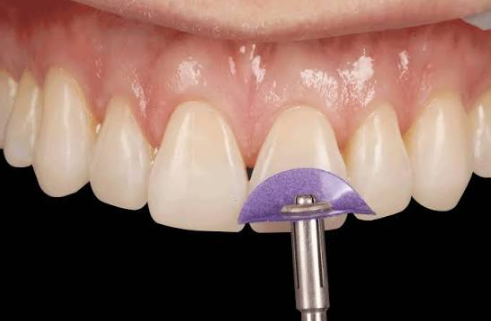
This is where composite edge bonding for worn teeth can help. The material is added directly to the edge of the tooth to rebuild the missing portion, restore contour, and improve symmetry. Dentists often use it as a conservative cosmetic and protective treatment, especially when the wear is limited to the enamel edge or small areas of dentin exposure.
See also: How Accounting Firms Support Small Business Cash Flow
Composite bonding can restore tooth length without aggressive treatment
Composite resin is a tooth colored material shaped and bonded to your natural tooth. For worn front teeth, the dentist adds it where length has been lost, then sculpts and polishes it so it blends with the surrounding enamel. In many cases, this can be done with little or no drilling.
That conservative approach matters. Research on direct composite restorations for tooth wear supports their use as a minimally invasive option that preserves natural tooth structure while improving function and appearance. You can read more in this review of direct composite resin for worn dentition.
Composite bonding is not a cure for the reason your teeth wore down in the first place. If grinding, acid erosion, or bite imbalance continues unchecked, the new edges can chip or wear too. That is why good treatment planning matters. A dentist may recommend a night guard, changes to acidic habits, or further evaluation if reflux or sleep related grinding is involved.
Front tooth edge bonding also depends on the amount of remaining enamel, your bite pattern, and your expectations. If the teeth are severely worn, heavily broken down, or poorly positioned, veneers or crowns may be more suitable. Some cases need orthodontic movement or bite adjustment before bonding will last well.
Professional planning improves the durability of composite restorations
Bonding sounds simple because the appointment can be straightforward, but the planning behind it is what makes the result hold up. The dentist needs to assess where the wear came from, how your upper and lower teeth meet, and how much length can be added without creating a bite interference. If too much is added in the wrong place, the new edge becomes the first point of contact and takes more force than it should.
Clinical literature on restoring anterior tooth wear also points to the value of careful diagnosis, occlusal planning, and conservative materials when rebuilding worn teeth. This clinical review on managing worn anterior teeth explains why long term success depends on more than the filling material alone.
A good result should look natural when you talk and smile, not bulky or too square. That often means small, precise changes rather than dramatic ones. If one front tooth is shorter from a chip and the other has mild wear, both may need slight reshaping so the smile stays even.
Composite edge bonding offers a practical middle ground
| Option | Tooth Structure Removed | Best For | Limits to Consider |
|---|---|---|---|
| Composite edge bonding | Usually minimal to none | Mild to moderate wear, small chips, lost edge length | Can stain, chip, or need maintenance over time |
| Porcelain veneers | Usually some enamel reshaping | Cosmetic redesign with color and shape changes | Higher cost, less easily repaired chairside |
| Crowns | More reduction of natural tooth | Teeth with major breakdown or large existing restorations | More invasive, greater long term structural commitment |
| No treatment | None | Very minor wear with no symptoms | Wear may continue, smile changes may become more obvious |
For many people, composite bonding sits in a useful middle ground. It is more affordable than porcelain in many cases, easier to repair if a small chip happens, and conservative with healthy enamel. The tradeoff is maintenance. Composite does not behave exactly like natural enamel or porcelain. It can pick up stain, lose polish, or need touch ups after years of use.
Three steps you can take right away
1. Track the wear you can see. Take a clear photo of your smile and close up photos of the front teeth. Compare them with older photos if you have them. If the teeth look shorter, flatter, or more uneven than they did a few years ago, that is useful information to bring to a dental visit.
2. Pay attention to the cause, not just the chip. Morning jaw soreness, headaches, acid reflux, frequent sparkling drinks, or stress clenching all matter. If the cause is still active, any repair has a harder job. Write down what you notice so the dentist can connect the wear pattern to the likely source.
3. Ask for a conservative cosmetic evaluation. A general and cosmetic dentist can check your bite, enamel, and wear pattern and tell you if lengthening the front teeth with composite is realistic. Ask how much length can be added, how the bite will be protected, and whether a night guard is part of the plan.
Restoring worn front teeth can be simple and conservative
If your front teeth look shorter than they used to, you are not imagining it, and you are not stuck with it. Composite edge bonding can restore lost length in a way that respects your natural tooth structure and improves both appearance and function. The best results come from treating the wear and the reason behind it at the same time.
If you are ready to find out whether edge bonding is the right fit, schedule a visit with a general and cosmetic dentist and get a plan built around your bite, your goals, and how much tooth structure you have left.