You may already know your child has a cavity, and the hard part is not the diagnosis. It is the thought of getting through the visit when your child squirms, cries, pulls away, or loses patience within minutes. That stress is real. Many parents are not worried only about the tooth. They are worried about whether their child can handle the chair, the sounds, the numb feeling, and the time it takes to fix the problem. Some families also begin thinking ahead about braces for kids in Modesto.
How pediatric dentists manage cavities in children who cannot sit still for long usually comes down to three things. They shorten and simplify the visit when possible, they use child-focused behavior guidance, and they consider safe comfort measures or sedation when a child needs more help. The goal is not to force a child through treatment. The goal is to treat decay in a way that protects both oral health and the child’s sense of safety.
Pediatric dentists treat the cavity and the child’s tolerance at the same time
A cavity in a young child is rarely just a small dental issue. If treatment is delayed because a child cannot stay seated, decay can deepen, pain can build, eating can get harder, and sleep can start to suffer. Families often end up in a cycle of waiting, hoping the tooth will stop hurting, then rushing in when things get worse.
That pattern is common because children do not resist care for one single reason. Some are very young and simply do not have the attention span. Some have sensory sensitivities. Some had one bad medical or dental experience and now tense up the moment they see a chair. Others are fine for a cleaning but cannot manage the longer, more demanding steps involved in a filling or crown.
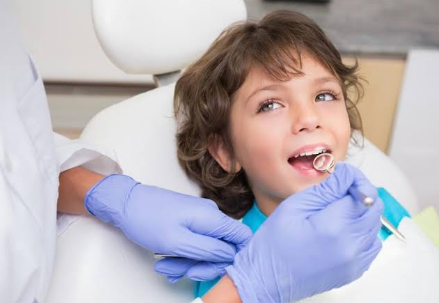
A pediatric dentist plans around those limits. The first step is often deciding whether the cavity can be treated with a short visit and simple local numbing, or whether the child needs a different approach. This is where a children’s dentist for cavities differs from a general office that mainly treats adults. The room, the language, the pacing, and the treatment plan are built around children’s behavior and development.
That may mean using tell show do techniques, giving brief breaks, using mouth props so tired little jaws do not have to work so hard, and choosing materials or methods that reduce chair time. In some cases, silver diamine fluoride may be used to slow decay when a traditional filling is not realistic that day. In other cases, a stainless steel crown may be the better choice because it can protect a badly damaged baby tooth more reliably than a large filling.
Research continues to show that early childhood tooth decay remains a real public health issue. The CDC discusses the scale of untreated decay and prevention challenges in children in this CDC report on pediatric oral health. When a child cannot cooperate for long, the answer is not to ignore the cavity. It is to match treatment to the child’s needs before the problem grows.
Behavior guidance and sedation options help restless children get safe dental care
Parents often worry that if a child cannot sit still, the only option left is sedation. That is not always true. Many cavities can be treated with skilled behavior support alone, especially if they are caught early and the appointment is timed well. Morning visits, a calm parent presence when appropriate, clear expectations, and a shorter treatment plan can make a big difference.
Some children still need more support. If a child is very young, has strong dental fear, needs a lot of work done, or has special health care needs, sedation may be discussed. Pediatric dentists use this carefully, with screening, instructions, and close monitoring. The American Academy of Pediatric Dentistry provides practical guidance for families in its page on preparing for your child’s sedation visit.
This matters because an unfinished procedure can be harder on a child than a well planned sedation visit. Picture a child who is already exhausted, whose mouth is numb, who is crying halfway through treatment, and whose tooth still is not fixed. That experience can deepen fear and delay future care. The right support can prevent that spiral.
Common approaches pediatric dentists use for children who cannot sit still
| Approach | Best fit | Main benefit | Limitation |
| Short visit with local anesthetic | Small cavity, child with mild restlessness | Fast treatment, low recovery time | May not work for children with strong fear or limited tolerance |
| Behavior guidance techniques | Children who respond to coaching, modeling, and breaks | Builds trust and coping skills | Not enough for every child or every procedure |
| Silver diamine fluoride | Very young children or those unable to complete drilling that day | Can slow decay without traditional filling steps | Does not restore tooth shape and can darken the decayed area |
| Nitrous oxide | Children with anxiety who can still follow basic directions | Helps relax while staying awake | Not suitable for every child or every treatment need |
| Deeper sedation or general anesthesia | Extensive decay, severe anxiety, very limited cooperation | Allows full treatment in a controlled setting | Requires more planning, cost, and medical review |
The right path depends on the size of the cavity, the child’s age, pain level, medical history, and how much treatment is needed. A pediatric dentist looks at the full picture, not just the tooth.
Parents can make the dental visit easier before they ever walk in
Schedule the visit around your child’s best hours. A child who skips a nap, is hungry, or is already overstimulated has less patience for any dental treatment. Early day appointments often work better, especially for younger children.
Use simple words and avoid loaded promises. Telling a child “it won’t hurt” can backfire if they feel pressure, noise, or numbness they did not expect. Clear language works better. Say the dentist is going to help fix the tooth and count, clean, or paint parts of it. Keep your tone calm.
Ask about options before the day of treatment. If you already know your child struggles to sit still, say that when you book. Ask whether the office offers a desensitization visit, nitrous oxide, silver diamine fluoride, or sedation planning. This is often the difference between a rushed, stressful appointment and a visit that actually works.
Early cavity treatment protects your child from bigger problems later
Managing dental decay in restless children is not about expecting perfect behavior. It is about finding the safest, least stressful way to get care done before pain and fear grow. Children who cannot sit still for long are not bad patients. They are children with real limits, and pediatric dentists are trained to work within them.
If your child has a cavity and long appointments already feel impossible, do not wait for the tooth to get worse. A pediatric dentist can help you choose an approach that fits your child’s age, comfort, and treatment needs, and that can make the whole experience easier for both of you.