Most people’s idea of shipment tracking is a webpage that shows a package moving from one scan point to the next. You see it left the warehouse, cleared customs, arrived at a local depot. Between those events, you know nothing. The parcel disappears into the logistics network and reappears when someone scans it at the next checkpoint.
That kind of tracking works well enough for a book ordered online. It’s nowhere near sufficient for a pharmaceutical shipment that has to stay within a precise temperature range, a pallet of electronics that can’t be dropped or tilted, or a high-value cargo that needs to be monitored for tampering around the clock. Real time shipment tracking is a fundamentally different thing from scan-based tracking. It doesn’t wait for someone to scan a barcode at a checkpoint. It reports continuously, from wherever the cargo is, across whatever mode of transport it’s using, regardless of country or carrier. And it monitors considerably more than location.
The Difference Between Tracking Location And Tracking Condition
GPS tells you where something is. That’s useful, but it’s only one dimension of what actually matters when cargo is in transit.
Think about what can go wrong with a shipment that has nothing to do with where it is. Pharmaceutical products that require cold chain integrity can be at exactly the right GPS coordinates and still be ruined if the temperature inside the container drifted above the acceptable range for two hours. A shipment of precision instruments can arrive at the correct destination having been dropped hard enough to cause internal damage that won’t be discovered until someone opens the crate and tests the equipment. A sealed parcel can be opened and resealed without ever leaving the expected route.
Location tracking tells you none of this. Condition monitoring does.
Modern real-time tracking devices monitor a range of variables simultaneously. Temperature and humidity are the most commonly required for perishable and pharmaceutical cargo. Shock detection records g-force readings, alerting operators when a shipment has been subjected to an impact above a defined threshold. Tilt sensors record orientation, flagging when cargo marked for upright transport has been placed on its side. Light sensors detect box opening, triggering an alert when a sealed shipment has been exposed to light, which is one of the clearest indicators of unauthorized access.
All of these data points are reported live, not at the next checkpoint. An alert goes out the moment the threshold is breached, with the precise GPS coordinates of where the event occurred. That’s a completely different level of information than knowing a parcel was scanned at a depot.
How Multimodal Tracking Works In Practice
Global supply chains don’t move cargo on a single transport mode. A shipment might leave a factory by road, transfer to a container vessel for an ocean crossing, clear customs and move to an air freight leg, then complete the final mile by road again. Each handover between modes is a point where tracking can fail if the solution isn’t built to handle the transition.
Multimodal tracking means the device stays with the cargo through every leg of the journey and maintains continuous reporting regardless of whether the cargo is on a truck, a ship, or a plane.
Air freight introduces specific requirements. Electronic devices on commercial aircraft must meet regulatory standards to be permitted in the hold. IATA approval and approval from individual airlines are necessary before any tracking device can travel as cargo on a passenger or freight aircraft. A tracking solution that’s approved by over 35 major airlines and holds IATA approval can accompany shipments on air legs without requiring removal or creating compliance problems at the freight acceptance point.
At sea, connectivity is the primary challenge. GPS signal is available over open water, but cellular network coverage is not. Ocean-going tracking solutions use satellite connectivity to maintain reporting during the parts of a voyage that are beyond cellular range. For a container crossing the Pacific, that’s most of the journey. A tracker that drops to cellular-only loses visibility for the bulk of the transit.
Indoor tracking adds another dimension. Warehouses and distribution centres are GPS-compromised environments. Satellite signal penetrates poorly through roofs and racking. A tracking solution that handles indoor positioning as well as outdoor GPS coverage maintains visibility when cargo is in storage or being processed at a facility, not just when it’s moving between locations.
See also: Why Businesses Are Investing in Google Ad Services Wooster for Sustainable Growth
What Cold Chain Monitoring Actually Requires
Cold chain management is one of the most demanding applications for real-time tracking, and one where the stakes of getting it wrong are highest.
Pharmaceutical products, vaccines, biologics, and medical devices often have temperature requirements measured in fractions of a degree. The acceptable range for some products is narrow enough that a brief excursion above or below the specified limits constitutes a genuine quality event that may require the entire shipment to be assessed or destroyed. The financial and human cost of a cold chain failure at scale is significant.
What cold chain tracking needs to deliver is immediate, location-specific alerting. Knowing that a temperature excursion occurred somewhere between origin and destination is not enough to act on. Knowing that it occurred at a specific GPS coordinate at a specific time, while the cargo was in the custody of a specific carrier on a specific leg of the journey, is the information that makes accountability and remediation possible.
Humidity monitoring accompanies temperature monitoring for many pharmaceutical and biological shipments. Some products are sensitive to moisture as well as temperature, and a tracker that monitors both simultaneously provides a more complete picture of the conditions the cargo has experienced throughout transit.
Security Monitoring For High-Value Cargo
High-value cargo, whether that’s electronics, luxury goods, gold, artwork, or sensitive industrial components, faces a different set of risks. Theft, tampering, and unauthorized access are the primary concerns, and standard location tracking does little to address them.
Light sensors on a tracking device provide a direct indicator of box opening. When a sealed shipment is opened, the interior is exposed to light. A sensor that detects that exposure and immediately generates an alert, complete with GPS coordinates, gives operators actionable information in real time rather than a mystery to investigate after the fact.
Shock detection is relevant for high-value cargo for a different reason. Equipment that has been dropped or subjected to significant impact may show no external damage while having sustained internal damage that only becomes apparent when it’s put into use. A shock event recorded during transit, above a defined g-force threshold, creates a documented record that a specific handling incident occurred. That record matters for insurance purposes and for deciding whether equipment needs to be inspected before being put into service.
Tilt monitoring addresses the handling requirements for cargo that must be kept upright. Machinery, certain chemical containers, and other items with orientation requirements can be damaged or rendered unsafe if transported on their side. A tilt alert that fires when the cargo exceeds 35 degrees from its original position, with location data attached, identifies where in the chain the handling failure occurred.
A Single View Across The Entire Fleet
For businesses running multiple simultaneous shipments, the practical value of real-time tracking depends heavily on how the data is presented. Individual tracker reports for each shipment are useful. A single dashboard showing the live status of every active tracker across all modes, all carriers, and all geographies is considerably more powerful.
A global view that shows all active shipments in one place, with the ability to drill into individual trackers for detailed condition and location data, turns real-time monitoring from a reactive tool into a proactive management capability. Operators can see at a glance which shipments are progressing without issues and which have triggered alerts, and respond to exceptions without having to check individual reports one by one.
API integration extends that capability further. When tracking data feeds directly into existing logistics management systems, the information becomes part of the broader operational picture rather than sitting in a separate platform that someone has to remember to check. Blockchain integration adds an additional layer of data integrity, creating a tamper-evident record of the complete condition and location history of each shipment from origin to destination.
Why The Use-And-Return Model Changes The Economics
Traditional asset tracking involved either expensive permanent devices attached to owned assets or disposable trackers used once and discarded. Neither model works well for businesses shipping cargo through third-party carriers on variable routes.
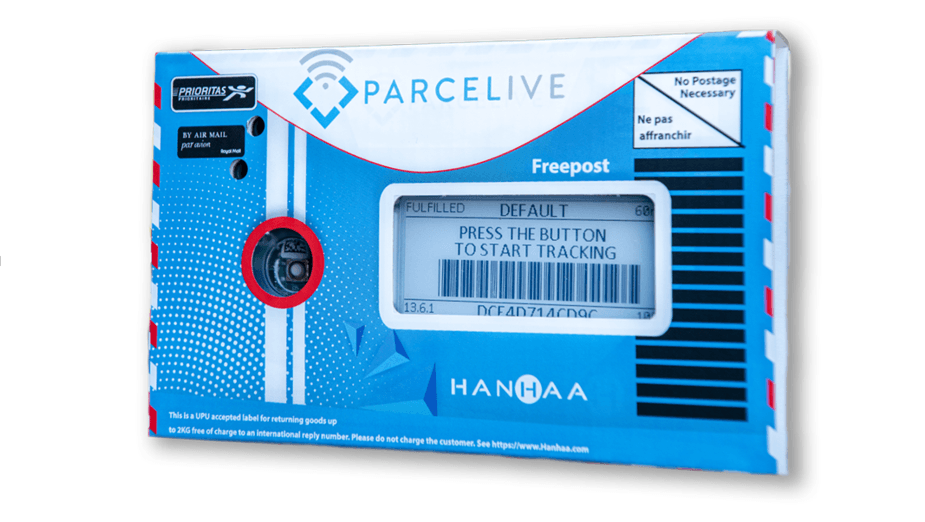
A use-and-return model changes that calculation. The tracking device travels with the shipment. At the destination, the recipient simply presses a button on the device and drops it in a postbox. It returns to the service provider, is reconditioned, and goes out again with the next shipment. The business gets real-time visibility on every shipment without owning the tracking hardware or managing its return logistics.
That model also affects the environmental footprint of the tracking operation. Reusable devices don’t generate the waste of single-use trackers at the scale of a global logistics operation. For businesses with sustainability commitments in their supply chain operations, a reusable tracking solution aligns with those goals in a concrete way.